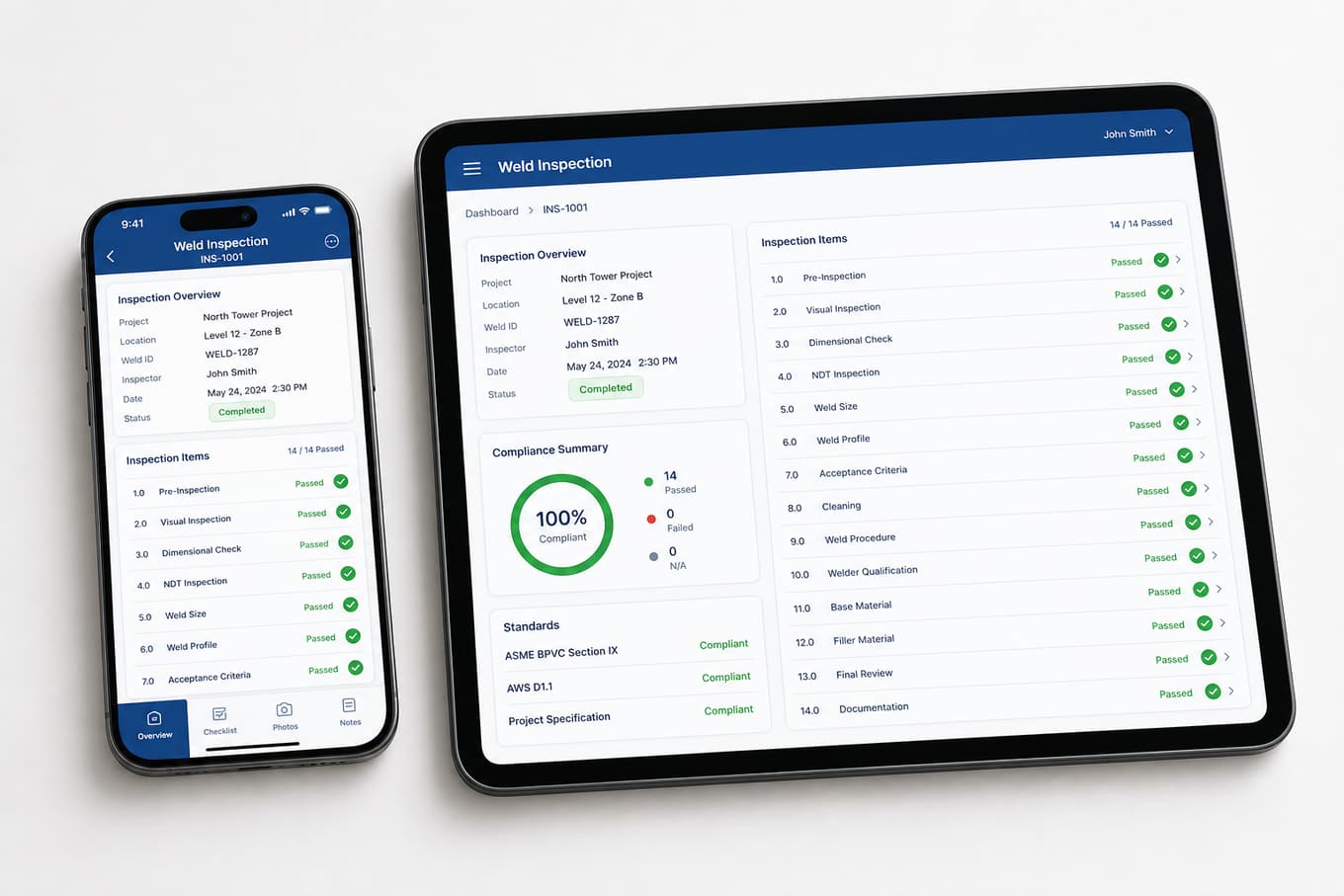
How to apply weld inspection documents in a live project
Start with a representative project and define which records must remain connected from preparation through delivery. Assign ownership for the weld register, inspection records, supporting evidence and report review. This prevents documentation from becoming a separate end-of-project activity and gives coordinators a clearer view of missing information while work is still accessible.
Use a consistent record structure for weld numbers, locations, procedure references, inspection status and open actions. Photos and documents should be attached to the record they support, with enough context for another team member to understand why the evidence matters. A clear status model helps distinguish work that is prepared, inspected, awaiting review or ready for handover.
Review points for QA/QC and welding coordination
QA/QC teams should regularly review incomplete records, unresolved findings and evidence that is not yet connected to a project or weld. Welding coordination can use the same review moment to check WPS/WPQ context and whether the current documentation reflects the work being performed. The goal is not to replace qualified judgement, but to make the information needed for that judgement easier to find.
- Confirm project scope and responsibilities before registration starts.
- Use stable weld identifiers across drawings, inspections and evidence.
- Record findings and open actions while the work is visible.
- Review report and dossier status before delivery pressure increases.
From records to handover
Before handover, review whether project records, inspection outcomes, photos, certificates and reports tell one coherent story. Missing evidence should be visible as an action rather than discovered during final assembly. WeldInspect Pro supports this documentation workflow; official standards, certification, qualified review and formal conformity decisions remain leading.
A practical review rhythm
Schedule a short documentation review at meaningful project moments: after project setup, before inspection starts, after significant findings and before handover. Review the same questions each time. Are identifiers consistent? Are responsibilities clear? Is evidence attached to the correct record? Are unresolved actions visible to the person who owns them? This repeatable rhythm reduces reliance on memory and gives project, QA/QC and documentation teams a shared view of progress.
Use the final review to confirm that the report output can be understood without reconstructing conversations from email or separate folders. Record any remaining gap as an owned action with context and status. This makes the handover conversation more precise while leaving formal technical decisions with the qualified people responsible for them.